Bob Woodruff of Maple Valley goes from nasty crash to tied for second in points race
Published 9:14 am Wednesday, August 3, 2011
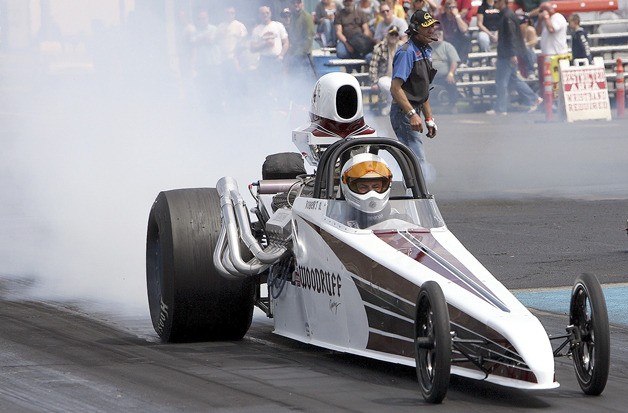
Nearly nine months ago Bob Woodruff decided he was going to quit drag racing after a nasty accident in his super comp car.
Woodruff, a Maple Valley resident, took his car to a race in Las Vegas in November with fellow super comp drivers Earl Cunningham and Paul Nolak.
“I crashed my car,” Woodruff said. “Completely destroyed the whole front end of it. All I came out of it with was a concussion.”
And a desire to get out of the car.
“I was going to quit racing because it scared the heck out of me,” he said. “But, my wife connie and my friends Earl Cunningham and Paul Nolak talked me into fixing the car.”
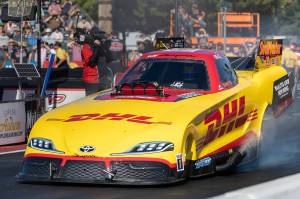
And this weekend he will be behind the wheel of his super comp dragster during the NHRA Northwest Nationals at Pacific Raceways near Covington.
“I took the car to Randy Parker’s Race Shop in Puyallup,” Woodruff said. “He completely rebuilt the car, put on a whole new front end, a new roll cage and a new cockpit where the driver sits. Then I had it repainted at Marine View Collision.”
Woodruff first started racing when he was a teen in Oregon, but, it was a street racing “which is not good but at that age you don’t think about those things.”
He moved to this area in 1980 and by then he was no longer racing.
Then he met Mike Seekins, who owns Highline Auto Repair in Burien, and was a pretty serious super comp racer.
“I started traveling with him,” Woodruff said. “He and I became best friends and we still are to this day.”
In 2004, Seekins decided to step away from the drag strip and focus on boating, so Woodruff said he asked his friend to teach him how to drive a dragster.
“Connie and I took one car and Mike took one car,” Woodruff said. “We’ve been racing every year since then.”
Woodruff explained to his wife when they first began dating 14 years ago that there were two things he loves – hunting and racing.
He hoped she would embrace both. She did.
In fact, it’s been a while since Woodruff last went hunting, but he’s a contender in the Division 6 super comp championship chase as he is tied for second.
He explains he wouldn’t have had the success he’s had — he finished fourth in the category in 2010 — were it not for his wife.
“I really believe the secret to Connie’s and my success in drag racing is that Connie is just as much a part of the drag racing as I am,” Woodruff said. “Without Connie I wouldn’t be nothing in that race car. I would just be another guy racing up and down that track wasting my time and money.”
Rather than banging his head against the wall, Woodruff said, his wife helps with a number of responsibilities including helping evaluate weather conditions and applying that information to the car’s tune up.
In the sportsman series — think of it as the minor leagues of drag racing but with more categories and a much more diverse demographic from weekend warriors to full time operations with sponsors — drivers set up to drive no faster than a set time.
And in super comp the NHRA has set a national index, Woodruff explained, so every driver in that class is trying to get down the quarter mile strip in 8.90 seconds.
The idea is to get as close to that time as possible.
“Because of that national index you can go anywhere and be very competitive,” he said. “When the NHRA did this it leveled the playing field whether you have a corporate sponsorship… or you race out of your back pocket like Connie and I do.”
Woodruff said his car can go at least a second and a half faster but he enjoys racing in the super comp category.
“With the way my car is running and the way it’s put together this year we’re doing very well,” he said. “When you’re tied for second place in your division, your car is running well, you’re driving well and you’ve had a lot of luck. Super comp is decided by a few thousandths of a second. I choose to run super comp because it’s so competitive and it’s super close. We all win races by two or three thousandths of a second so when you a race like that it’s a very satisfying.”
It would also be quite satisfying to win a national event such as the one hosted at Pacific Raceways this weekend.
“It’s very special because if you’re a sportsman class racer and you go to anyone’s national event and you do well, you can win a lot of money,” Woodruff said. “If you win a national event, each of one those decals will pay you $300… not only does the NHRA pay you well, but if you win, each one of those manufacturers on the side of your car, they will pay you $300. We don’t run those decals because they’re pretty, we run them because they have a financial benefit to them if you win.”