Details behind a Kent pilot’s fatal flight into Lake Meridian
Published 2:55 pm Tuesday, August 4, 2026
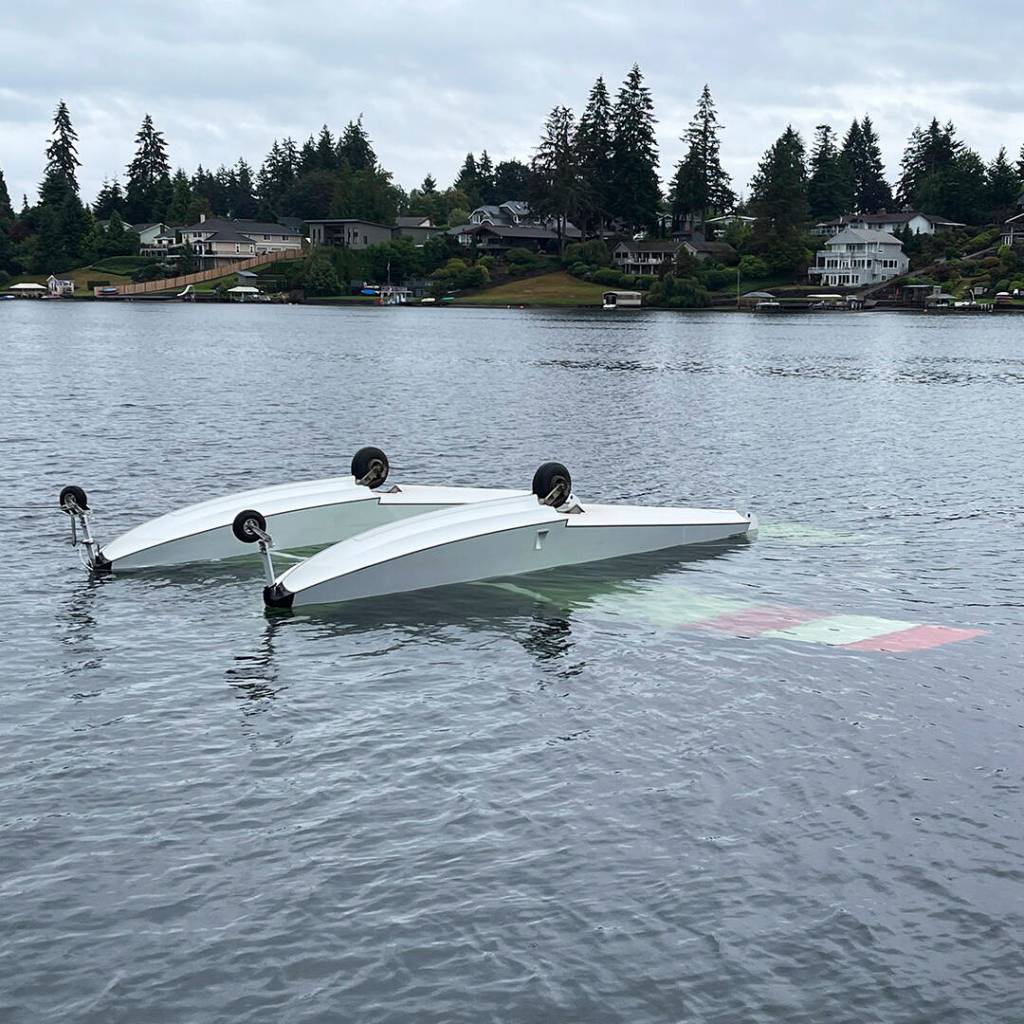
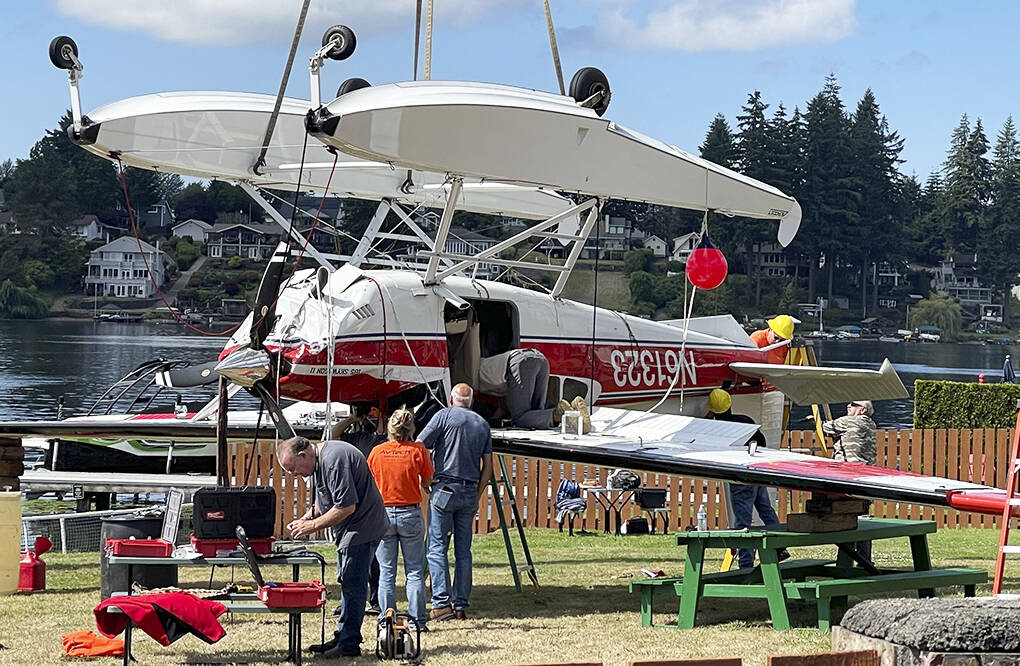
What seemed like a simple, short flight for Alan Williams to Lake Meridian in Kent so a friend could use his seaplane as a backdrop for a wedding ceremony, turned out to be the final flight for the 74-year-old pilot.
Nearly two years after Williams crashed his Cessna A185F on Saturday morning, Aug. 24, 2024 into Lake Meridian, was rescued from the cockpit under the water and died five days later in a hospital, the National Transportation Safety Board (NTSB) released its final report.
Similar to its preliminary report issued about 30 days after the crash, the NTSB determined that the pilot had left the landing gear down when it should have been retracted. As the floats were about to hit the water, the plane abruptly nosed over and came to rest inverted, partially submerged in the lake.
“Examination of the airplane and testing of the airplane’s landing gear position advisory unit revealed no mechanical malfunction or failure that would have precluded normal operation,” according to the NTSB final report released June 25.
The NTSB reached the following conclusion about the cause of the crash:
“The pilot’s failure to properly configure the amphibious landing gear for a water landing, which resulted in a touchdown on the water with the wheels extended, noseover and airplane submersion,” according to the report.
Many details about the fatal flight were revealed in the NTSB report, including statements from witnesses and friends.
Storing the plane
Dave and Tamara Nason told investigators in 2o24 that they live at Norman Grier Field, 29300 179th Place SE in Kent, a section of unincorporated King County. They said Williams asked them for permission to park his plane at their property during the Fourth of July holiday.
“He did not want it moored at his residence on the lake during the busy holiday lake activity,” according to the report.
The city of Kent holds its annual Fourth of July Splash festival at Lake Meridian Park, which includes a fireworks show and draws large crowds.
The Nasons agreed. Williams retrieved the airplane after the holiday, then requested to return with it and store it there for a time, while he was out of town. He was delayed in returning for the airplane and extended the storage request to return for it at the end of August.
According to the Nasons, the airplane “just sat there the whole time.” It had been parked next to a hangar, outside and had not been disturbed. The morning of the accident, the pilot contacted the Nasons to let them know he’d be coming that day, to get the airplane.
During his preflight, Williams decided that the landing gear tires needed air, according to the report. He started the airplane’s engine, let it run for several minutes, then repositioned the airplane in front of the Nason’s hangar to utilize his compressed air. He added air to the tires, then taxied the airplane for departure.
“The first attempt to take off was aborted on the runway, and the airplane taxied back to take off again,” according to the report. “During the second take off attempt, the airplane completed the take off and departed.”
The Nasons watched the departure until the airplane flew out of sight and observed that the pilot “never pulled the gear up when he left.”
Wedding ceremony
Carter Kennedy, an airline pilot, had his wedding scheduled for Aug. 24, 2024 at a Lake Meridian home where Williams planned to tie his seaplane to the dock at the residence so it could be part of the backdrop for the ceremony and be used during photos.
Kennedy told investigators two year ago he had recently flown as a passenger with Williams when he was returning his airplane to Norman Grier Field to park it at a friend’s property. He described Williams as “a well-disciplined, professional pilot.”
On the day they returned the airplane to Norman Grier Field, Kennedy observed the Aerocet landing gear alert system when Williams placed the gear in the extended position for landing, and the aural part of the system sounded loudly through their headsets:
“Danger, Danger, Gear out, No water landing,” according to the report.
The alert startled Kennedy – he had not been expecting it and he said that it reminded him of the type of aural alerts he would hear in the Boeing 737 such as “Wind Shear, Wind Shear.” He described the alert as very clear, specific and loud. At the time, Williams seemed to anticipate the alert, then acknowledged it and let it play out.
Williams explained the alert to Kennedy, looked at his wing mounted mirror to check the gear, and asked Kennedy to check the mirror on his side, according to the report. The alarm phrase repeated itself a second time and then stopped. Kennedy did not notice whether or not Williams pressed any buttons to deactivate it.
Kennedy also told investigators that around 7 a.m. on Aug. 24, 2024, he noticed the weather and texted Williams about his plans to bring the airplane over from the airfield, for the wedding that day. He wanted to alleviate any pressure he may have been feeling about bringing the airplane and told Williams “not to worry about bringing it, given how the weather looked, and that his safety was more important.”
Williams responded to him that “the weather was fine.”
Area weather at the time of the accident included light rain but met visual flight rules (VFR) criteria, according to the NTSB.
At 10:02 a.m., Kennedy received a text message from Williams “On my way.”
At the home where the wedding was to take place, Kennedy heard the airplane flying over, but he did not see the plane’s final approach or landing. Shortly after, he heard sirens.
Firefighters responded at about 10:09 a.m. Aug. 24, 2024 to reports of a plane upside down in the lake. Lake Meridian Park is at 14800 SE 272nd St. Williams lived in the Lake Meridian neighborhood.
The rescue
Two firefighters, a Kent Police officer and two residents entered the water to rescue the pilot, who was alone on the plane. Firefighters were able to remove him within 20 minutes from the time of dispatch, according to Puget Sound Fire.
Christopher Williams lives in a home across the lake from the pilot. Christopher Williams reached out to the NTSB to submit his witness statement. He said he and his children often watch the airplane come and go from the lake and saw it fly over and land the day of the accident.
As soon as the plane hit the water and flipped over, Christopher Williams called 911 and went to the crash site in his boat. He was the second person to arrive at the site and he jumped into the water to try to assist in extricating the pilot.
“He found the airplane’s doors to be locked and debated with others in the water, about whether to break the windows or not,” according to the report. “They thought there might be air in the cabin still, and worried about flooding the cabin with water if they broke the windows.”
About 15 minutes after the crash, emergency services arrived at the accident site and entered the water. They broke into the airplane and extricated the pilot.
Once the pilot was in the hands of emergency services, Christopher Williams realized how cold he was and decided to head home with his boat, to warm up. At that time, he noticed that the landing gear was extended.
Final days
Firefighters and paramedics performed lifesaving treatment on Alan Williams, including CPR at the scene, prior to medics taking him to Harborview Medical Center in Seattle.
Five days later, Williams died peacefully, surrounded by his wife of 50 years, his four sons, family and loved ones, according to a statement released in 2024 by the Williams family through Puget Sound Fire spokesperson Pat Pawlak.
Williams had been in critical condition in the intensive care unit at Harborview since the crash. Williams died of an anoxic brain injury (lack of oxygen) from the near drowning, according to the King County Medical Examiner’s Office, which ruled the death an accident.
“Alan was a career pilot with a highly decorated 55-year career in aviation,” according to the family statement. “His love of flying was only surpassed by his love for his wife, children and grandchildren. He was a selfless person who was always there to help those around him. Like the love he showed others, our heartbreak cannot be put into words.”
The family appreciated how people responded after the final flight.
“We thank our friends and neighbors for their heroic call to action, as well as the professionalism shown by Puget Sound Fire and rescue and the Kent Police, who risked their lives to help our beloved father and husband. Because of their combined efforts, and the amazing care provided by the staff at Harborview Medical Center, we were given a few more days with him.”