Sen. Cheryl Pflug from Maple Valley takes a new role in state government
Published 9:56 am Wednesday, June 13, 2012
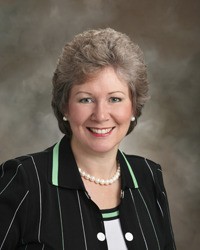
State Sen. Cheryl Pflug, a Republican from Maple Valley, had just two hours to decide if she wanted to accept an appointment to the Washington Growth Management Board.
“I really I had zero time to think about it,” she said. “I did apply for the position along with a lot of other people a few months ago, but I hadn’t really expected I would really get the opportunity.”
Pflug accepted the position and resigned her elected role representing the 5th District, which includes Maple Valley, with the Washington state Senate.
The Growth Management Board was enacted in 1990 and rules on disputes that arise from county and city growth-planning policies in the state. The board has representation from three unique geographical and regional areas in the state, including the Eastern region for counties and cities east of the Cascade Mountains, the Central Puget Sound region and the Western region for counties and cities west of the Cascade Mountains.
Pflug’s position is a six-year term.
Having recently completed her law degree at Seattle University, Pflug stated in a telephone interview that her newly acquired education as well as her home near the urban growth boundary, will help her in making decisions on the board.
“It’s a good opportunity to learn a really specialized area of law and so that’s something I like to do,” she said. “Most of the people on the hearing board are lawyers. A couple of people with local government backgrounds as well … like local council members. But it’s a quasi-judicial position. Essentially when there’s a dispute that rises under the growth management act, parties submit their briefs, so it’s a lot like a court proceeding. The growth management part kind of fits more with my background just because land use issues are such a big deal with a district like ours, and so we’re sort of the classic area where you’re trying to preserve as much of the natural environment as you can and at the same time we have the exploding growth.”
After serving two and a half terms in the state House of Representatives, Pflug was appointed to the state Senate in 2003, elected in 2004 and re-elected in 2008. While in the Senate, she served as the ranking member of the Senate Health and Long Term Care Committee and as the Deputy Republican Leader.
Among the achievements she said she is most proud of was the passage of Senate Bill 5978, a Medicaid fraud reform bill she sponsored. The bill was passed in March.
“It was a big deal to me,” she said. “One of the things I’ve been increasingly aware of is that I’m not sure I had fully grasped…we think about fraud, but we don’t really realize how rampant it is. Government does a lot of contracting and some of our venders, if you will, are huge corporations, and there are some pretty sophisticated fraud schemes. They are milking us for hundreds of millions, and the thing that is so difficult about that is that some of the corporations are pretty powerful in Olympia and in Congress as well. I think this is where the legal education helped the most, and also understanding more the way they subtly twist words and present a completely different picture than what is really going on.”
Pflug said that the board position is an opportunity to take her public service career down a new path.
“I have been working pretty hard and feel like I’ve been pulled in a lot of different directions for years now,” she said. “It’s sort of nice to have a normal schedule. Not so much time away from home and evenings and weekends and that kind of thing.”
Additionally, Plfug mentioned finances as one reason she accepted the position, which pays $92,500 a year.
“The legislature it’s a fairly expensive job for a pretty low salary, and so not that many people find that they’re able to have a second career,” she said. “It does kind of depend on districts, but that was difficult for me too. I’m a single mom with kids in college, so that part is just hard.”
Along with her law degree, Pflug also has a bachelor’s of science in nursing from the University of Washington.
She stated that figuring out what was best long-term from a financial perspective contributed to her decision to earn a law degree.
“Initially (at law school) I was thinking I’d helped write policies for governors someday, and I was also thinking realistically I wasn’t going to have sort of a normal retirement,” she said. “The legislature, it’s not like your salary grows over years of service. That wasn’t going to provide a retirement. So what would I be interested in doing that works with my background and I could work part time in my 70s and what could I do during the interim? So that’s what I was thinking. But I was kind of also promising myself I wouldn’t make a specific decision about any sort of law until I had a little more experience. In the meantime it made me a much better legislator. I think this will be an interesting area and then I can probably continue to practice in that area down the road.”