Memories of a coal mining father in Black Diamond | Welsh Days
Published 3:20 pm Thursday, June 2, 2011
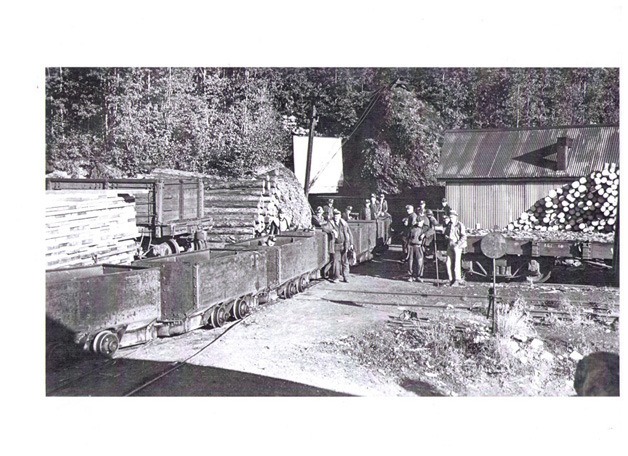
Walking through the Black Diamond Historical Museum is like strolling through the family room for Gomer Evans, Jr.
A framed picture of his parents’ wedding sits on top of a glass display of family Bibles.
A photograph of his older brother, Dave, hangs on the wall in the main room.
As he flips through a collection of historical pictures, he finds his father, Gomer Evans Sr., sitting among a row of Welsh engineers.
The 83-year-old former mayor of Black Diamond is the ideal person to chair the upcoming Welsh Heritage Day on June 4. Full-blooded Welsh, Evans’ family history and those of the Welsh in Black Diamond share the same narrat ive.
ive.
Both of his parents hailed from Wales. His father first worked the Rhondda Valley coal mines when he was 12 years old. He came to America in 1910 and was promoted to the position of fire boss when he was 18. The fire boss was the first worker to enter the mines at the beginning of the shift and would ensure it was safe.
At first, they carried cage canaries, but eventually they used lamps that would brighten or become dim to reflect the gas levels and amount of oxygen in the air.
To hear Evans put it, his father was a true Welshman, whom he described as part of culture of reserved people.
“They’re quiet with the things they do,” he said.
This didn’t mean, however, that they were shy or timid. His father was an amateur boxer and “let his fists talk for him when he felt someone needed it.”
“Nobody mucked with my dad,” Evans stated.
In his twenties, however, the elder Evans encountered five men who did. Because they were down in the mines, he insisted they wait until they were on the surface.
Over at the town water tower, Evans, Sr. knocked all five of them down while his partner and aspiring sports writer watched. He eventually published the story.
Evans describes his Welsh background as present, but not prominent in his family or in the town. The diverse racial population blended in well in spite of different languages and cultures.
Evans attributes this to how his parents raised him to be American. His father would speak Welsh on certain occasions, mostly over a beer with his friends, but he spoke primarily English and demanded his children do the same.
“He said, ‘You’re in America,’” Evans recalled. “’You learn to speak English.’”
This was fine with Evans, who calls the Welsh language “something else” and difficult to learn. He visited Wales in 2009 with his daughter, Sherrie Evans.
There, he was amazed at how little things had changed since his father left more than 100 years ago.
“It’s like you take an old history book and open it up,” he said.
In town, the Welsh were known for their enthusiastic choirs, the Presbyterian church they built and their prounion stance as the result of the harsh working conditions in Wales, where miners worked 10 hour shifts, six days a week.
Evans has lived in Black Diamond his entire life. He grew up in a house near the ball park, the middle child of nine.
As a teenager he delivered groceries for the company store in its 1934 sedan.
In such a small town, he didn’t need addresses to locate people’s homes, and sometimes he could tell who the delivery was for just by looking at what they had bought.
Like everyone else, he hung out with his friends at the confectionary on Railroad Avenue, which is now occupied by the Black Diamond Pizza and Deli.
He fondly recalls the ritual of swatting incoming freshman with paddles as they left the wooden middle school building and entered the brick high school building.
“We had lots of great spirit,” he said.
Evans also played baseball for the Black Diamond bush league as an outfielder, pitcher and first baseman. Competition between other small towns like Enumclaw was fierce, and betting was an integral part of the game.
Temporarily following in his father’s footsteps, he worked for five years for the Johnson Coal Company, both in the mine and as a truck driver.
He said that in the mines “you get really close to your partner. And the weather is always the same: 70 degrees, dark and kind of wet.”
For the Evans working in the mines for a living was not considered an option. Having worked in mines since childhood, the elder Evans was determined to get his children out of the business.
When one of the Evans brothers tried to work in a water-level mine, Evans Sr. ordered him out.
“He didn’t care what we did,” Evans said. “He said ‘just do something else.’”
His father’s advice proved to be wise, as he eventually suffered from black lung, a condition caused by the continuous drilling that filled the air with coal dust.
Though coal mining isn’t in Evans’ blood, something about Black Diamond is.
Out of the nine Evans children, four boys and five girls, the former mayor is the only one still living there, and has seen it go from a company town to an incorporated city when the first City Council meeting was held in 1959.
Last year, Black Diamond gave him a “Lifetime Commitment Award” for his involvement and participation.
“I don’t know,” he replied on why he stayed. “When you’re born and you’re raised here, you have an interest in the city.”